
|
|
By Jo Ellen Meyers Sharp, on May 18th, 2013
 Creeping phlox. (C) Jo Ellen Meyers Sharp
I never have to look outdoors to know what’s blooming. The customers at the garden center where I work part time keep me informed.
They come in and ask for the plants they see blooming. Here’s what’s on the hit list this year.
Creeping phlox (Phlox subulata), a low-growing evergreen ground cover that has had a splendid spring. This perennial does best in full sun and well-drained soil. Once established, this North America native plant is drought tolerant. Creeping phlox retains its needle-like leaves all winter. It gets about 6 inches tall with a 24 inch spread. Plant in rock gardens, in the front of a flower bed or border, along walls and slopes or as a carpet of color under trees and shrubs. Shear off spent flowers to tidy up the plant in spring.
Cascading branches of white flowers on bridal veil spirea (Spiraea vanhouttei) spur interest in this old-fashion, easy-care shrub. This was in my yard and all over the neighborhood where I grew up. It remains a staple in older neighborhoods today, but can be hard to find, so ask your garden center to order it. Bridal veil spirea does fine in part shade to full sun. It can get up to 10 feet tall and 20 feet wide, so make sure to give it room. If this needs to be pruned, do so right after it is done blooming.
 Bridal veil spirea. (C) Jo Ellen Meyers Sharp
I’m lukewarm on crabapples (Malus) until I see them bloom like they have this spring. And this is the first year that I noticed intense fragrance on this common tree. Look for crabapples that are resistant to the leaf diseases that can plague this tree and for cultivars that hold the fruit through winter for extended interest. Newer cultivars have been grafted on root stock that reduces or eliminates suckering—sprouts coming from the base of the tree, a common complaint about this and other fruit trees.
By Jo Ellen Meyers Sharp, on May 15th, 2013
 Alliums add dramatic flair to the garden. (C) Jo Ellen Meyers Sharp
Except for a few 80-degree days, it’s been a slow, low-temp spring, which has prolonged tulips, in particular. This year, the large alliums, a gift from Carol Michel at May Dreams Gardens, are beautiful and so dramatic. I’m going to have to get a lot more of these and other alliums, especially those that bloom a bit later in summer.
 Native columbine (Aqueligia canadensis). (C) Jo Ellen Meyers Sharp
The lower temps have also delayed the bloom cycle of other plants. Just starting to reign supreme in the garden are the beautiful native columbine (Aquilegia canadensis), which self-sows about, but would never be considered invasive. This year, the flowers’ red-orange seems more intense.
The coral bells (Heuchera) are forming a nice mass, with so much foliage color…oh, they bloom, too. There are a few heucherella and tiarella mixed in there too, along with sweet woodruff (Galium odoratum) and Spanish bluebells (Hyacinthoides hispanica). The bluebells are always such a nice surprise because they bloom later than other spring bulbs.
My maidenhair fern (Adiantum) survived the winter, always cause for celebration. The clump was given to me by a regular customer at the garden center where I work. She over heard me telling another customer that maidenhair ferns were hard to find in the trade and brought one for me! The garden center has some really nice customers.
The ‘Bath’s Pink’ Cheddar pinks (Dianthus gratianopolitanus) grows more on my asphalt driveway than in the garden bed. I swear this plant would grow on concrete. It is so fragrant right now!
 Jack-in-the-pulpit (Arisaema triphyllum). (C) Jo Ellen Meyers Sharp
The reblooming bearded iris (Iris) ‘Immortality’ is lovely and soon, the blue one will bloom, but I don’t remember its name. Reblooming iris flowers are large, fragrant and put on a nice show in spring and again in late summer.
A favorite plant—Arisaema triphyllum—has emerged amid the Epimedium (E. x versicolor ‘Sulphureum’) and I’m thinking about moving it before it gets completely swallowed up. The jack-in-the-pulpit came from the late Jim Story, the first reader who wrote me when I started writing about gardening in 1989. He was such a generous soul, as are many gardeners, but he was special.
Last fall, Longfield Gardens sent a bunch of spring-blooming bulbs. By far, among my favorites is Anemone de Caen ‘Mr. Fokker/Sylphide’ (Anemone) mix. I hope they return next year, but if not, they have been beautiful this year.
 A variety of heuchera, heucherella and tiarella have rooted nicely to offer a mass of colors. (C) Jo Ellen Meyers Sharp
 Dozens of trial plants have arrived for the 2013 growing season. (C) Jo Ellen Meyers Sharp
Last spring, I whacked back my 20-year-old ‘Miss Kim’ lilac (Syringa pubescens subsp. patula) and last fall, shifted her to the back yard because Carol Michel’s garden designer (Wendy Ford, Landscape Fancies) said it was too big for its space and blocked the view of my front door. I planted another one in the front, but about 5 feet from the original, which allows for a better view of the door. Both are ready to bloom.
With all of this work from Mother Nature, it’s like Christmas for me. And not just because of the plants blooming in the garden. Awaiting planting are this season’s trail plants. Before it even gets in the ground, I think I’m really going to like ‘Purrsian Blue’ catmint (Nepeta faassnii). I’ve already cut it back once and it’s not even planted in the ground yet. However, it immediately—within a week—began blooming, not something I’ve noticed with catmint. It’s not supposed to flop, either, so we’ll see how it does once its in the ground.
 Bath's Pink Cheddar pinks (Dianthus gratianopolitanus). (C) Jo Ellen Meyers Sharp
Thanks to Carol at May Dreams Gardens for being the host of Garden Bloggers’ Bloom Day. Please feel free to join in. We think it’s the longest running gardening meme on the Web.
By Jo Ellen Meyers Sharp, on May 11th, 2013
 Winter hardy sunchokes are related to sunflowers and are native in to the Eastern United States. © CanStockPhoto Inc./Jochen
Questions about tulips, jet bead and Jerusalem artichokes fill the inbox.
M.S. of Indianapolis wants to know “why do some tulips in the landscape change color?”
Several things could cause this. Some tulip bulbs are bred to do change colors through the day. Other times, it could be the natural aging of the flowers, when many colors fade.
“While not common, it occasionally happens that a bulb flower’s bloom color can change through a spontaneous mutation or exposure to natural elements that cause one layer of cells to mutate to another color,” said Tim Schipper, owner of ColorBlends.com. “The bulb itself is unaffected and remains healthy, but the flower color is different.”
Invasive species
D.O. read about jet bead, a shrub noted for thriving in “bad soil, shade and slopes. I thought I hit the jackpot. However, after doing some research, I find that it’s a very invasive shrub. Is this true?”
Jet bead (Rhodotypos scandens) does sound like a dream plant because it survives in less than desirable growing conditions. Its over-adapatability and proliferation is why this Asian shrub is considered a pest.
“Jet bead is a serious problem in Indy Parks, and a few other natural areas in the state,” said Ellen Jacquart, director of northern stewardship at the Nature Conservancy of Indiana and a member of the Indiana Invasive Plant Committee. “This is one we’d really like to get assessed and out of trade.”
Chokes
P.B. “is interested in planting Jerusalem artichoke, but am having trouble finding any bulbs. Any suggestions?”
Jerusalem artichoke (Helianthus tuberosus), frequently called sunchoke, is a perennial in central Indiana, usually planted from edible tubers. It is related to the sunflower, but not to artichoke (Cynara cardunculus var. scolymus), which can be grown from seed as an annual in cold climates. Each of these will likely have to be ordered from online retailers. Jung Seed sells both. Purdue University has more info on growing sunchokes.
By Jo Ellen Meyers Sharp, on May 5th, 2013
 Viburnums, tulips, lilacs and other plants perfume the spring air. (C) Jo Ellen Meyers Sharp
A good spring overloads the senses. Not only does the earth break out in eye-pleasing blooms, many of the flowers release delicious fragrance.
Until just a few days ago, the office, kitchen, bedroom, backyard and enclosed back porch have been perfumed by viburnums, incredibly easy-to-grow shrubs.
In a partly sunny location in the back of the yard are two Burkwood viburnums (Viburnum burkwoodii), an upright shrub that can reach 10 feet tall and 6 feet wide when grown in full sun. Mine are closer to 6 feet tall and 4 feet wide.
In their shadier location, the burkwoods have a more open growth. In full sun, the growth is much more dense. Although my burkwoods have fewer flowers in the shade than they would have in full sun, they still are loaded. This viburnum is semi-evergreen, retaining its foliage through winter, depending on the severity of the weather.
Outside the bedroom window and bordering the enclosed porch sits a Judd viburnum (V. x judii). This is a rounded, 6-foot tall and wide fragrant beauty with blue-green leaves that turn a deep red in fall and cling to the plant for several weeks of late season color. It prefers full sun, but tolerates light shade.
Like all spring bloomers, the viburnums’ flowers and fragrance can be rushed through their season with high temperatures in spring.
We all know about borrowed landscape views—the scenes created by a neighbor’s plants. Some of us also enjoy borrowed scents. A neighbor’s old fashion lilacs (Syringa vulgaris) have burst open, adding fragrant breezes to my living room.
Any day now my two ‘Miss Kim’ Manchurian lilacs (Syringa pubescens subsp. patula) will begin blooming outside the living room and the bedroom windows. These bloom a few weeks later than the old fashion lilacs. ‘Miss Kim’ also is not affected by the powdery mildew fungus disease that afflicts many traditional lilacs. It has decent fall color, too, with deep purple leaves.
And just a few days ago, the crabapples (Malus) were in full bloom at the Indianapolis Museum of Art. The blooming branches created a large arch, which held the fragrance at nose level. I’d never noticed that crabapples were so fragrant.
These scents of the season reinforce the good sense of planting fragrant bulbs, perennials, annuals, trees or shrubs where you can enjoy their elusive attributes.

By Jo Ellen Meyers Sharp, on May 4th, 2013
 Tomato, pepper and cucumber transplants are among the vegetables that don’t like cold soil. Plant these outdoors around Mother’s Day. © Jo Ellen Meyers Sharp
As we head into prime planting season, here are a few things to keep in mind.
Containers
When potting up containers, use a high quality potting mix. This is usually a soilless mix with vermiculite, finely shredded organic matter and other ingredients that promote drainage. Potting mixes also are light weight. Since the mixes are soilless, be sure to fertilize regularly, according to the product label directions.
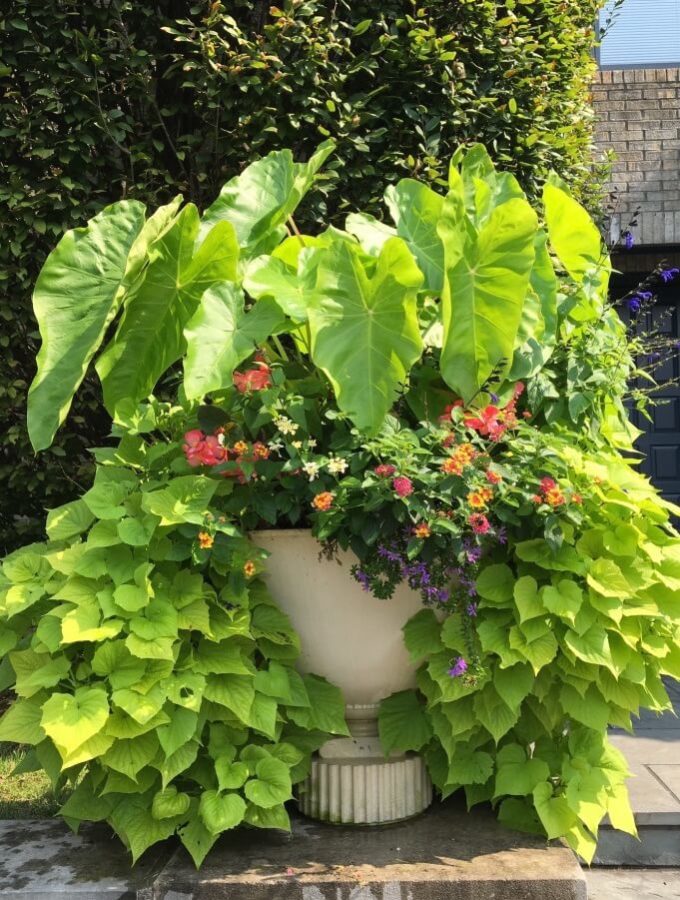
Containers have three basic elements: thriller, filler and spiller. The thriller is the largest or most dramatic plant, frequently the centerpiece or backdrop. Fillers are moundy-roundy and help fill gaps. Spillers cascade over the edges of containers.
Vegetables and Herbs
Don’t push planting. Warm season vegetables, such as tomatoes, eggplant, cucumbers and peppers, are not happy in cold soil. Wait until May 10 (or Mother’s Day) to plant these crops and to sow seeds for green beans, corn, squash and pumpkins.
Basil (Ocimum basilicum) is extremely sensitive to cold temperatures. It’s ok to plant parsley (Petroselinum crispum), sage (Salvia officinalis), thyme (Thymus) and other perennial herbs outdoors now.
Perennials
If a perennial or ornamental grass has all of its new growth around the perimeter of a dead or sparse center, that’s a signal it needs to be divided. Lift the plant and slice off the healthy growth to transplant. Discard the dead center.
Lawns
If you fertilized the lawn in fall, you probably won’t have to fertilize in spring or early summer. Doing so will increase mowing duties. Try to keep the lawn at about 3 inches high.
Annuals and Tropicals
Some annuals tolerate the cool temps of spring, but others, such as impatiens (I. walleriana) and geraniums (Pelargonium) do not fare well. Wait until mid-May to plant tender annuals and tropicals.
Try Something New
Lastly, try something new, whether it’s a vegetable or herb you’ve never grown, or a new perennial or annual. Trying new things in the garden keeps us growing.
By Jo Ellen Meyers Sharp, on May 3rd, 2013
Here’s HortusScope for May 2013, a checklist of garden and nature related events compiled as a public service by Wendy Ford of Landscape Fancies. Please click on the link below to download your copy.
HortusScope May 2013
By Jo Ellen Meyers Sharp, on April 27th, 2013
 Debbie Clark’s rose garden and portions of her perennial garden were under water last week along White River north of Broad Ripple. The flooding also displaced timbers and bricks around some of the beds. © Debbie Clark
If your landscape has been under water, here are a few things you should know.
For vegetable gardeners, the big rains came before we planted tomatoes, peppers, corn, green beans and other warm-season crops. Cool-season vegetables, such as cauliflower, Brussels sprouts, broccoli, lettuce and spinach, may have to be declared a loss.
We don’t really know what is in the floodwater, which could contain animal manure, human waste or other contaminants, such as pesticides or oils. It is really hard to rinse off these contaminates from the cracks and crevices of lettuces, broccoli heads and other plants.
Seeds and seedlings likely were washed away, so you will need to sow again or replace with transplants.
How much damage trees, shrubs and perennials sustain will depend on how long they were under water. Water saturates the soil, displacing oxygen, a critical element for root and plant survival. Worms and beneficial microorganisms also need oxygen to survive.
Dead or compromised roots will be reflected above ground with tip or branch die back, yellow, limp or droopy leaves and stunted growth on trees and shrubs. Top growth on perennials will be yellow or dead, but new growth may develop from the base or crown of the plant. Some perennials likely drowned and will need to be replaced.
Besides drowning plants, the floods may have eroded the soil from tree and shrub roots, in garden beds and lawns. Replace soil as needed.
Once the water drains away, most of us will be anxious to fix things. As difficult as it may be, wait until the soil dries out. Working with soil that is too wet destroys its texture, damaging it even more.
Finally, to get the microorganism active again, add compost, rotted cow manure, chopped leaves or other organic matter to the soil surface, or work it in the soil when planting or sowing seeds.
By Jo Ellen Meyers Sharp, on April 20th, 2013
 'Lizzano' tomato would work well in a hanging basket or a patio pot. Photo courtesy All-AmericaSelections.org
If there’s hope on the horizon for the gardening industry, it’s in food.
For the last few years, growers, garden centers, landscapers and gardeners have struggled with oppressive weather, a downturn in home construction and reduced discretionary income.
Edibles are the fastest growing segment in the gardening business, a trend that has remained steady or increased slightly over the past several years. The “keep it local” culture and concerns about food safety have been driving factors and so has taste. In our yards or community gardens, we control how we grow the food, such as our selection and use of products for insects or diseases.
Nearly 52 percent of the 68 million gardening households expect to grow edible plants — vegetable, herbs and fruits — this year, an increase of 11.3 percent, according to the most recent survey by the Garden Writers Association Foundation.
Edibles are the fastest growing segment in the gardening business, a trend that has remained steady or increased slightly over the past several years. The locovore culture and concerns about food safety are the driving factors and so is taste. We also control how we grow the food, such as use of chemicals for insects or diseases.
Where do we grow our food? The survey says about 35 percent of us grow plants in the ground, nearly 16 percent grow food in containers and nearly 31 percent use both methods.
For those who say they will be growing food in 2013, the top challenges are time (35.7 percent), insect and disease control (30.8 percent), wildlife control (26.0 percent), irrigation (23.6 percent) and cost (13 percent), the survey found.
A lot of angst and potential failure can be averted with a few steps:
• Start small in sunny space.
• Work in organic matter when digging the bed.
• Buy disease and insect resistant plants.
• Water and fertilize regularly.
• Keep weeds out.
By Jo Ellen Meyers Sharp, on April 19th, 2013
 Downy mildew on impatiens leaf. Photo courtesy Purdue University Plant & Pest Diagnostic Laboratory.
Gardeners and growers throughout the country are battling a fungus called impatiens downy mildew, which turns the underside of the plant’s leaves white or gray.
If you noticed this last year, do not plant bedding impatiens (I. walleriana) in the same place this year. This disease only affects bedding impatiens. New Guinea and SunPatiens are not bothered by the disease.
Besides a white mildew on the undersides of leaves, other symptoms include collapsed centers on the impatiens or all of the flowers will be on the tips of the plants. Avoid planting impatiens where there was disease for at least five years. Don’t compost any diseased impatiens.
Trade off with begonia, torenia, coleus or another annuals that tolerates the same low-light condition that impatiens loves. Many tropicals, including some gingers, also make good shade plants.
 Early symptoms of downy mildew on bedding impatiens. Photo courtesy Purdue Plant & Pest Diagnostic Lab
 Severe symptoms of downy mildew on bedding impatiens. Photo courtesy Purdue Plant & Pest Diagnostic Lab
By Jo Ellen Meyers Sharp, on April 16th, 2013
 Virginia bluebells (C) Jo Ellen Meyers Sharp
Yes, it’s spring, but boy has it been a seesaw.
A long cool March led to a slow, low spring, where plants emerged, flower buds opened and lasted for days, if not weeks.
 Barrett Browning daffodil. (C) Jo Ellen Meyers Sharp
Then wham, in true Hoosier tradition, the temps hovered in the 70s for days, taking daffodils from flower to fried in about two days. Daffodils absolutely do not like the heat. All that’s left are the late blooming ones, which are some of my favorites.
Last fall, I planted a couple of dozen anemones (A. blanda) for about the umpteenth time. But this time, I think they may actually do something besides feed the critters. Ferny foliage is above ground and I’m awaiting the flowers.
Last fall, I also planted guinea-hen flower—sometimes called checkered lily (Fritillaria meleagris), which I like because it is so unusual.
 Fritillaria meleagris. Here it's planted with Narcissus of-unknown-name. (C) Jo Ellen Meyers Sharp
And, as a photographer, it’s not always a good idea to shoot top down, but rather, it’s better to shoot closer to ground level. However, if you do that, you miss the truly exquisite beauty of the inner tulips.
In all its golden glory for a few short days is the Epimedium x versicolor ‘Sulphureum’. I love epimedium, a four-season beauty that is just not used enough.
 Tulips and hyacinths (C) Jo Ellen Meyers Sharp
Long-time survivors of my early attempts at bulb plants are the lipstick red tulips (Tulipa) and deep blue Dutch hyacinths (Hyacinthus). The colors are so intense, even after more than 20 years, and they keep getting closer together. With spring bulbs, I’m always reminded of Sally Ferguson, one of the first public relations professionals I meet when I started writing about gardening. Lilies remind me of Scott Kunst of Old House Gardens, whom I have never met, but feel as if I know because I have interviewed him many times and because he writes sweet little notes with his catalogs and orders. And he gives members of Garden Writers Association a discount on orders.
 The inner beauty of tulip (C) Jo Ellen Meyers Sharp
Lastly, the Virginia bluebells (Mertensia virginica), my favorite spring ephemeral, have begun to bloom. I started with five corms at least 20 years ago and now, these beautiful native plants fill the whole back portion of the yard. They have begun to spread into more areas and I transplant those that root in the pathways. These are hard to find in garden centers and even in spring bulb catalogs, but the latter is where to start looking, if you want some for your yard. Or, ask someone who has them to share. Now would be the time to transplant them.
Thanks to Carol Michel at May Dreams Gardens for being the host of Garden Bloggers’ Bloom Day, when gardeners all over the world post a snapshot of what’s going on in their landscape on the 15th of the month.
 Epimedium (C) Jo Ellen Meyers Sharp
|
|