Calendar

March 2010
S M T W T F S
 123456
78910111213
14151617181920
21222324252627
28293031EC

10 tips to help migrating birds

Cat with titmouse. (C)Ornitolog82 for iStockphoto

Cat with titmouse. (C)Ornitolog82 for iStockphoto

As warmer temperatures begin to arrive and we spend more time outdoors, we hear the many, familiar sounds of spring, including the songs of our returning migrant birds.   At this time of year, American Bird Conservancy often gets asked how people can help birds. Toward that end, conservancy offers these 10 things people can do to aid or protect declining birds in their homes and yards.

1.                    Keep your cat indoors. This is best for your cat as well as the birds, as indoor cats live an average of three to seven times longer. Even well fed cats kill birds, and bells on cats don’t effectively warn birds of cat strikes.

2.                    Prevent birds from hitting your windows by using a variety of treatments to the glass on your home. See the conservancy’s new flyer.

3.                   Eliminate pesticides from your yard. Even those pesticides that are not directly toxic to birds can reduce insects that birds rely on for food and pollute waterways.

4.                   Create backyard habitat. If you have a larger yard, create a diverse landscape by planting native grasses, flowers and shrubs that attract native birds. You will be rewarded by their beauty and song and will have fewer insect pests as a result.

5.                   Donate old birdwatching equipment such as binoculars or spotting scopes to local birdwatching groups. They can get them to schools or biologists in other countries who may not have the resources they need.

6.                   Reduce your carbon footprint. Use a hand-pushed or electric lawnmower, carpool, use low energy bulbs and Energy Star appliances. Contact your energy supplier and ask them about purchasing your energy from renewable sources.

7.                   Buy organic food and drink shade-grown coffee—increasing the market for produce grown without the use of pesticides, which can be toxic to birds and other animals, will reduce the use of these hazardous chemicals in the United States and overseas. Shade coffee plantations maintain large trees that provide essential habitat for wintering songbirds.

8.                   Keep feeders and bird baths clean to avoid disease and prevent mosquitoes from breeding.

9.                    Support bird friendly legislation. Example:  HR 4797, a proposed bill that provides for bird-friendly federal buildings.

10.               Join a bird conservation group and  learn more about birds. Support conservation work.

Most help needed during bird migration

According to conservancy, birds need our help now more than ever.  In addition to the ongoing threat of loss of habitat that is becoming magnified by global warming, millions of birds are directly killed due to a number of different human-related causes.

Buildings and cats take toll on birds

Scientists estimate that 300 million to one billion birds die each year from collisions with buildings.  Up to 50 million die from encounters with communication towers.  At least 11 million die from car strikes.  Another one million may die each day from attacks by cats left outdoors. Some of these deaths occur year-round but many occur during the peak spring and fall migrations. Some studies suggest that perhaps as many as half of all migrating birds do not make it back to spring and summer grounds, succumbing to various threats on either end of the journey.

“Protecting and helping birds is not only the right thing to do, it is also good for the economy and the future of our environment. Birds are invaluable as controllers of insect pests and as pollinators of crops, and also generate tremendous economic revenues through the pastimes of bird feeding and birdwatching,” said George Fenwick President of American Bird Conservancy.

Nearly 25 percent of Hoosiers feed the birds

A recent federal government study reports that over 20 percent of the U.S. population – 48 million people – participates in birdwatching.  Of that total, about 42 percent (20 million people) actually travel to see birds. Birders spend about $36 billion annually in pursuit of their pastime.  The top five birdwatching states by percentage of total population are: Montana (40 percent); Maine (39 percent); Vermont (38 percent); Minnesota (33 percent); and Iowa (33 percent). In Indiana, 24 percent, or 1.35 million people, feed the birds, according to a 2006 study by the U.S. Fish and Wildlife Service.

Take steps to prevent another attack of late blight
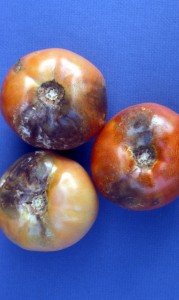
Late blight on tomatoes. Photo courtesy Purdue University

Late blight on tomatoes. Photo courtesy Purdue University

With vegetable planting season upon us, we need to take precautions to keep last year’s late blight disease from carrying over into this year’s crops.

Late blight affects members of the nightshade family, which includes tomatoes, potatoes and eggplant. A devastating, deadly fungus disease, late blight is spread through the air, on seeds or it can cling to leftover members of the nightshade family, such as tomato leaves or weeds.

Last year, the disease was reported in Marion and several other Indiana counties, along with most of the eastern United States. It had been several years since the disease was reported in Indiana, which ranks second in the nation for tomato production and processing.

When the disease strikes, there’s little the home gardener can do except pull out the plants and discard, not compost, them. Commercial growers have access to fungicides that are not available to homeowners.

As with this disease and many others, it’s important to follow good horticulture practices, such as fall cleanup, in the vegetable garden. Here are some more tips if late blight or other disease attacked your plants last year.

  • Don’t use any seed potatoes or tomato, pepper or eggplant seeds harvested from last year’s crops if your plants were infected.
  • Don’t buy seedlings that have leaf spots. Remove the leaves closest to the soil to prevent spores from splashing on the plant.
  • Plant these vegetables in a new location in the garden to reduce the risk they will pick up the disease from the soil where they grew last year.
  • Mulch around the plants to prevent water from splashing on the leaves and avoid overhead watering.
  • Pull any tomato or potato volunteers.

“We normally don’t worry about volunteer tomatoes and potatoes, but (this) year, growers need to be vigilant and pull any that may come up,” said Dan Egel, a plant pathologist at Purdue University. “They could continue to spread late blight.”

Here’s a Purdue publication on Late Blight on Tomato and Potato.

Elsbury’s open for business in Hope, Ind.

March 27, 2010
8:00 AMto6:00 PM

Elsbury’s, a large grower in Hope, Ind., has been sold and is open for business. Last year, Gordon and Nancy Elsbury wanted to retire and put the greenhouse operation and retail store on the market, and for a while, it seemed like it was going to close.

But in January, Brian and Kim McKinley purchased the business from the Elsburys. Gordon Elsbury has been named head grower and Nancy Elsbury will continue her work with herbs. Other longtime staffers also remain.

In a letter received this week, the new owners say they expect year full of events, including the popular Mum Fest and Christmas Open House. To kick off the season, Elsbury’s Growers of Hope Inc., will have a Spring Grand Opening March 27, 2010. Call for details: (812) 546-4454.

Boone County Master Gardeners hold Gardenfest April 10

April 10, 2010
9:00 AMto3:00 PM

Lebanon, Ind. — Gardenfest 2010, a free yard and garden show sponsored by the Boone County Master Gardeners, will be 9 a.m. to 3 p.m.. Saturday, April 10 at the Boone County Fairgrounds Community Building, Lebanon.

Free trees will be given to the first 500 guests.  There will be 21 exhibitors and door-prizes awarded throughout the day.

The schedule of speakers is:

9:30 a.m.  “Flower Concepts: Selection, Arrangements, Gift-giving”  by Sondra Adair

11 a.m.  “Arisaemas”  (jack-in-the-pulpits) by Chris Whilhoite

12:30 p.m.  “Daylilies and Hostas” by Cynthia Miller

2 p.m.  “Daffodils” by Mary Milberger.

Volunteers plant pansies at City Market
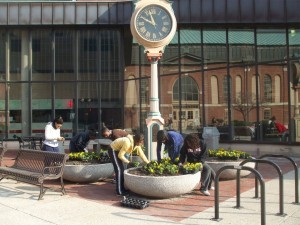
High school students from Keep Indianapolis Beautiful's program planted pansies and cleaned up beds at the City Market. (C) Jo Ellen Meyers Sharp

High school students from Keep Indianapolis Beautiful's program planted pansies and cleaned up beds at the City Market. (C) Jo Ellen Meyers Sharp

High school employees from Keep Indianapolis Beautiful made fast work of pansy planting and bed clean up Saturday, March 20, at the Indianapolis City Market.

Thank you to KIB, Carol Mullins from Indianapolis Downtown Inc., Master Gardeners Meredith and Kathleen Hull and other volunteers for adding festive colors and beauty at the market.

We’ll be giving the containers at the City Market their ’summer do’ in early June. Check back later for details.

High school students plant pansies at the Indianapolis City Market. (C) Jo Ellen Meyers Sharp

High school students plant pansies at the Indianapolis City Market. (C) Jo Ellen Meyers Sharp

Seminars scheduled at Sullivan’s

March 27, 2010
10:00 AMto11:00 AM
April 3, 2010
10:00 AMto11:00 AM
April 17, 2010
4:00 PMto5:00 PM
April 21, 2010
6:00 PMto7:00 PM
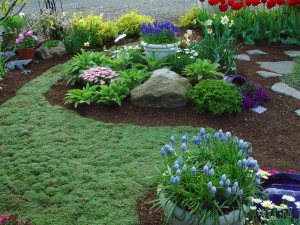
<p>The herb thyme can be used as a ground cover. Photo courtesy Stepables</p>

The herb thyme can be used as a ground cover. Photo courtesy Stepables

Four Hoosier Gardener seminars are scheduled at Sullivan Hardware & Garden, 6955 N. Keystone Ave., Indianapolis. Seminars are free, but registration is required.

10 – 11 a.m., March 27, Natural/organic lawn and landscape care. Learn about some of the latest organic or natural lawn and garden products on the market, how they work and what your expectations should be. We will also cover the special fertilizers used on crops such as veggies and nursery items

10 – 11 a.m., Saturday, April 3, Eat Your Veggies. Tips and techniques for growing veggies at home. Jo Ellen will discuss how to start seeds, tips on picking out plants and how to grow vegetables or sow seeds in a large container. Tips on growing both cool and warm season crops along with additional “how-to” tips will be shared.

4 – 5 p.m., Saturday, April 17, Gotcha’ Covered. Learn about some traditional and not-so-traditional ground covers than can take the tread without the dread. This seminar will focus on the Plants that Work® ground cover product, Nooks and Crannies®, along with some great perennials (heuchera, tiarella, epimedium, daylilies) and herbs (thyme, lavenders) that double as terrific ground covers.

6 – 7 p.m., Wednesday, April 21, Go to Pot with Perennials. Add long lasting color, texture and fragrance to your landscape with perennials, including flowers and small shrubs to fill those shady and sunny spots throughout your lawn. We will discuss the proper containers, potting mixes, fertilizers and of course…the perennials.

Mulch Madness playing in Broad Ripple March 27
March 27, 2010
1:00 AM
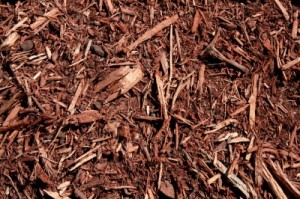
Shredded bark mulch. (C) iStockphoto.com

Shredded bark mulch. (C) iStockphoto.com

Volunteers are needed for cleanup and bed mulching, 9 a.m. to 1 p.m., Saturday, March 27 in Broad Ripple.

Meet at the Depot on the Monon Trail (across from Rusted Moon), or join any time at any of the gardens. 
Tools will be provided to install mulch, so just bring your gloves, proper clothing and protection.

The call for volunteers comes from Chris Turner, owner of Utopos Garden Concepts, who has installed and maintains several gardens in the Broad Ripple area over the past few years.

Permission to treat plants badly or kill them

<p>Asparagus fern survives winter in a dark, unheated garage. A trust testament to just how tough plants can be. (C) Jo Ellen Meyers Sharp</p>

Asparagus fern survives winter in a dark, unheated garage. A true testament to just how tough plants can be. (C) Jo Ellen Meyers Sharp

Gwyn Rager may be a behind the scenes person on the horticulture staff at the Indianapolis Museum of Art, but she was upfront with some sage advice for beginning or experienced gardeners.

The advice comes from the lessons she’s learned in her nine years at the IMA, where she is an assistant horticulturist and the administrative assistant for the department.

Rager and seven of her colleagues presented Horticopia, a cornucopia of their favorite plants, gardens, sculpture and design elements at a recent lecture sponsored by the IMA’s Horticultural Society.

Lesson 1: You can be “pretty mean to plants and they will still grow. Of course, you should plant them green side up.” Plants are incredibly forgiving and intent on surviving, so they can take a lot of abuse, yet survive and thrive.

Lesson 2: Right plant, right place. Although she hesitated to call it a trend, this common practice at the IMA is taking hold among the public as well. Right plant right place also ensures sustainable gardening practices, she said.

Lesson 3: “You won’t know until you try,” said Rager. A self-confessed competitive person, she willing to try anything with plants and if it works that’s good and if not, it’s another lesson learned.

Lesson 4: It’s ok to kill plants. Plants die and sometimes there’s no reason, other than nature, she said. Experienced gardeners kill plants all the time, so beginners should not be discouraged if some of theirs die, she said.

Lesson 5: “What works for you may not work for me, or (said another way) if it ain’t broke, don’t fix it.” You may be having great success growing a plant, and then an expert suggest you should do it another way. You do and the plant dies. The message: if what your doing is working, don’t mess with success.

Native Plant Society’s sale May 8

May 8, 2010
10:00 AM
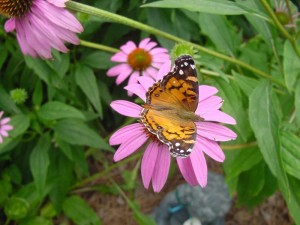
<p>Painted lady butterfly on purple coneflower.</p>

Painted lady butterfly on purple coneflower.

The Indiana Native Plant and Wildflower Society will have its annual sale and auction of native plants 10:15 a.m. to 12:30 p.m., May 8, 2010, at St. Richard’s School Gym, 3243 N. Meridian St., Indianapolis. The plant auction begins at 11:15. For more details, visit the Web site.

Herb Society’s Spring Symposium

April 17, 2010
3:00 AM
<p>At 18-inches tall, 'Fernleaf' dill does well in a container. Photo courtesy All-America Selections</p>

At 18-inches tall, 'Fernleaf' dill does well in a container. Photo courtesy All-America Selections

Dilly of a Day, a Spring symposium sponsored by the Central Indiana Unit of the Herb Society of America, 9 a.m. to 3 p.m., April 17, 2010 at the Ritz Charles, 12156 N. Meridian St. (U.S. 31), Carmel, Ind. 2010 is the Year of Dill. Registration: $35 for non-members; $30 for members, due by April 12, 2010. Visit the Web site for more details.

Among the featured speakers is Jim Long of Long Creek Herbs, Blue Eye, Mo., a prolific author and a member of Garden Writers of America. Other speakers: Victoria Wesseler, who blogs at Going Local and Donna Frawley of Frawley’s Fine Herbary, Midland, Mich..