Indoors
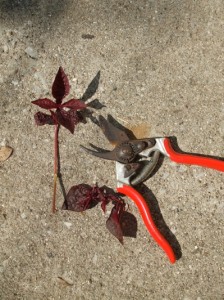

(C) Photo Jo Ellen Meyers Sharp
Take cuttings from plants such as impatiens, coleus, geraniums and wax begonias to winter over indoors. These are called herbaceous cuttings. Root the cuttings in media such as vermiculite, perlite, peat moss or planting soil instead of water. Keep them moist.
- Begin stocking up gardening supplies before they are removed for the season from retailers’ shelves. Pots, potting mixes, fertilizers and other products may be harder to find later in the season.
General landscape
- Keep newly established shrubs, trees, perennials, ground covers and grass well watered during dry spells. New plants should receive an inch of rain every seven to 10 days.
- Don’t fertilize woody plants now. It stimulates green growth that will not have time to harden off before winter.
- Be on the lookout for bagworms on evergreens and deciduous trees.
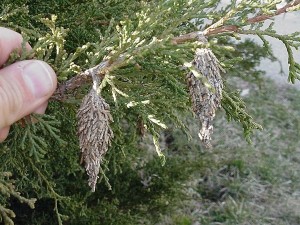

Bagworm on arborvitae. Photo courtesy Purdue University
Hand prune and destroy bagworms, fall webworms and tent caterpillars.
- Have soil tested for fall fertilization requirements if it has been three years or more since the last analysis. Here’s how to take a soil sample.
- Begin seeding new lawns or bare spots in established lawns in late August or, preferably, September. Fall is the best time to repair or start a new lawn.
- Order spring-flowering bulbs for fall planting. Store in cool, dry place. Plant in late fall and early winter.
- Sow seeds for biennials or transplant seedlings for blooms next year.
- Spade or till soil for fall bulb planting; add a moderate amount of fertilizer.
Vegetables and fruits
Complete fall vegetable planting by directly sowing seeds of carrots, beets, kohlrabi, kale and snap beans early this month. Lettuce, spinach and green onions can be planted later in August and early September. Thin seedlings as required.
Harvest onions after tops yellow and fall. Cure them in a warm, dry, well-ventilated area. The necks should be free of moisture when fully cured, usually about a week.
- Harvest potatoes after the tops yellow and die. Cure before storing.
- Pick beans, tomatoes, peppers and squash often to encourage more production.
- Harvest watermelon when the underside ground spot turns from whitish to creamy yellow; the tendril closest to the melon turns brown and shrivels; the rind loses its gloss and looks dull; the melon produces a dull thud rather than a ringing sound when thumped.
- Harvest sweet corn when kernels are plump and ooze a milky juice when punctured with a fingernail. If the liquid is watery, it’s too early; if doughy, it’s too late.
- Pears are best ripened off the tree. Harvest pears as soon as color changes, usually from a dark green to a lighter green, and when the fruit is easily twisted and removed from the spur.
- Prune out and destroy raspberry and blackberry canes that bore fruit this year. They will not produce fruit again and could harbor insects or disease.
Great post, I look forward to reading more.
Thank you for mentioning NGB. We appreciate the support.
Thank you so much! I know how hard you work. I write for 3 places, for Masters, Mail Journal and Indiana Indiana Gardens (The Garden Club of Indiana, INC)
You are such a pretty friendly lady!
I once talked to you about poison vines at a conference. You gave good scientific information.
Arleen
Thank you, Arleen.
Thanks for always having great info.
August Checklist is great, helps keep those important timings pinned to my frig. With winter on the way, timing is not forgiving.
Thank you!