This was posted originally at Indiana Living Green in May, 2008.
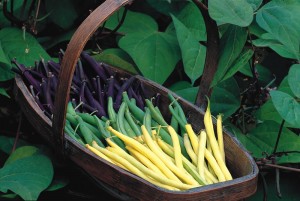
Snap beans. Photo courtesy National Garden Bureau
With food costs on the rise, more people will plant vegetable gardens this year.
Thirty-nine percent of gardeners planned to spend money on vegetable and fruit plants, according to the 2008 Early Spring Survey conducted for the Garden Writers Association by TechnoMetrica, a market intelligence company in Oradell, N.J.
That’s up from 32 percent in 2007 and 28 percent in 2006, according to the annual GWA surveys.
GWA is the sponsor, too, for Plant a Row for the Hungry, a 14-year initiative that has put more than 12.8 million pounds of food on the tables of individuals, families and others who don’t have enough to eat.
The idea is simple and easy — when plotting your vegetable garden, Plant a Row for the Hungry by designating a section for food that will be donated to a soup kitchen, food pantry, church or other organization that feed the hungry. If you grow your food in containers, you can designate one for feeding the hungry.
Or, you can rent a plot at one of Indianapolis’ 67 community gardens “of various shapes, sizes and locations,” said Ginny Roberts, who has been coordinating the PAR program and community gardens for the Marion County Extension office and Keep Indianapolis Beautiful Inc., for years.
Just who benefits from PAR? The working poor, the elderly, homeless and most importantly, children. Of the 213,000-plus Hoosiers who live in poverty in Gleaners Food Bank’s 20-county service area, at least 79,100 are children.
If you don’t know where to take your extra produce to feed the hungry, Indianapolis gardeners now have a central place.
Second Helpings Inc., will accept fresh produce, herbs and even flowers at 1121 Southeastern Ave., 8 a.m. to 4 p.m. Monday through Friday and 9 a.m. to noon on Saturday. Second Helpings will pick up donations of 40 pounds or more, said Joe Hoog, director of food rescue.
The organization weighs gardeners’ donations and reports the amount to Roberts so she can add it to the North American PAR tally. The food is distributed among more than 50 agencies, which serve seniors, children, homeless or otherwise hungry people, and 15 food banks. Some donated food is used in Second Helpings’ culinary training program, which prepares meals for distribution to the hungry, Hoog said.
A few tips
Vegetable gardens need to be in full sun in average to organically rich soil, which drains well. If using a container, the larger the pot the better. The container also should drain well. In the pot, use a high quality potting mix. A five-gallon bucket will hold one tomato or pepper plant.

'Big Beef' tomato. Photo courtesy National Garden Bureau drains well. If using a container, the larger the pot the better. The container also should drain well. In the pot, use a high quality potting mix. A five-gallon bucket will hold one tomato or pepper plant.
Start small and plant what you and your family like to eat. No reason to plant okra if no one will eat it at your house. Here are five easy-to-grow veggies:
- Lettuces
- Tomatoes
- Peppers
- Squash
- Beans
It’s easier to start with transplants for tomatoes and peppers. Beans, lettuce and squash are easy to grow from seed.
Vegetables have higher production with adequate water and fertilizer and when they don’t compete with weeds. Always read and follow the label of the product you use.
Harvest the plants when the produce is ripe. Delaying the harvest may cause plants to slow down or quit producing. For more information:
- Marion County Extension Community Gardens, (317) 275-9284
- Second Helpings Inc., (317) 632-2664
- Plant a Row for the Hungry
- Purdue University’s vegetable gardening publications