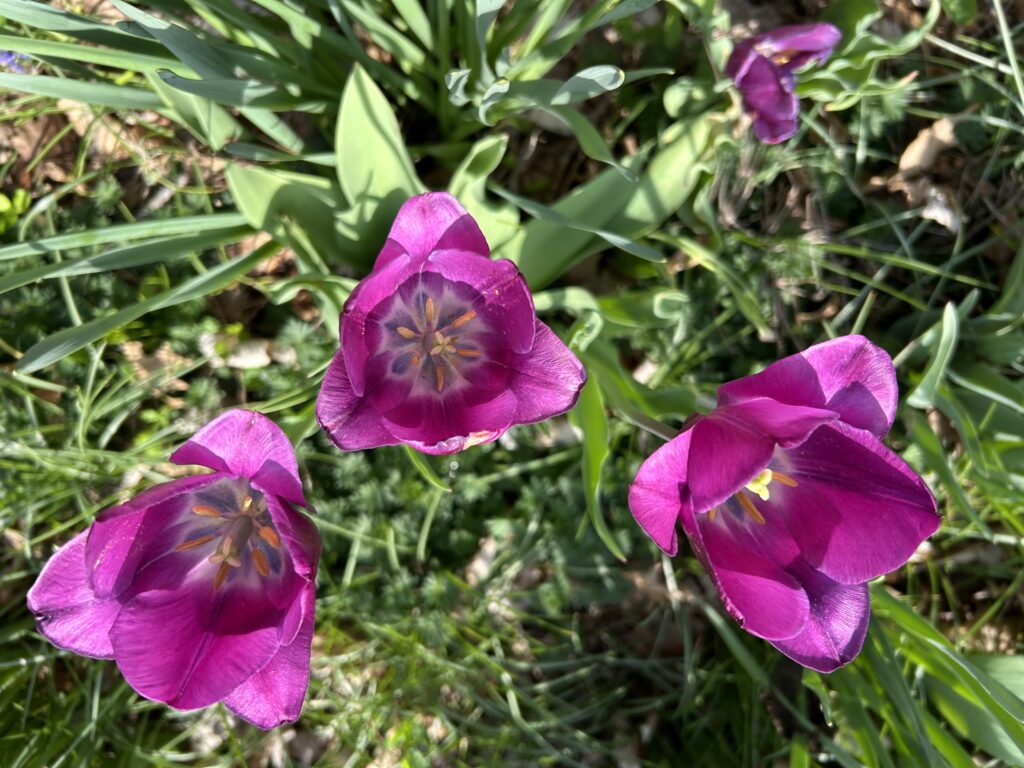
I always thought tulips (Tulipa spp.) were perennial, but it seems some are more perennial than others.
The goblet-like bulbs elicit more complaints than other spring bulbs. That’s because they usually don’t return for more than a couple of years. Lots of reasons for this.
When I went to the Netherlands several years ago, I asked an expert or two why tulips are not reliable in American gardens. They thought Americans watered their gardens too much, especially beds with a mix of plants like perennials, shrubs and spring bulbs.
That may be a cause for tulip failure, but more likely it’s the kind of tulips you have.
Most tulips, like Dordogne, Finola and Big Red, diminish over time, reliably sending up leaves but the flower never appears. Or if it does, it’s tiny.
Better bets for long-term beauty are species tulips, sometimes called wild tulips and Darwin tulips. Species include Lady Jane, Bakeri Lilac Wonder, Tarda, Tinka and Turkestanica are species tulips. Bakeri Lilac Wonder, Tarda and Lady Jane have come back for five or more years.
Colorblends Wholesale Flowerbulbs offers these tips to get tulips to
bloom again in future years we recommend that you:
- Remove the spent flowers as soon as the bulbs finish blooming. Snapping off the top 3 inches of the flower stem prevents seed formation and focuses energy instead on bulb growth.
- Allow the foliage to wither completely before you remove it.
- Avoid summer irrigation. Tulips prefer to be dry during their dormancy. (Sound familiar?)
One of the most overlooked attributes of beautiful tulip flowers is the inside. The patterns are as lovely as the flowers, but you have to take it slow to see and appreciate.